
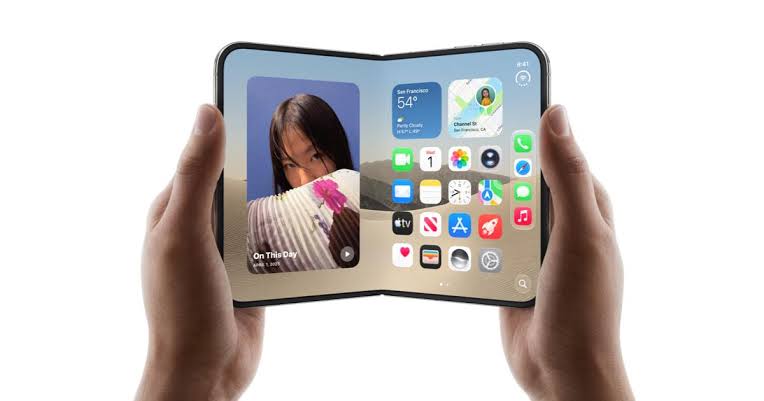
Apple September Event 2026: iPhone Duo and iPhone 18 Pro
Apple waited roughly seven years to fold a phone. Then it walked on stage, opened one up, and made everything else in the lineup fight for a spot in the frame.
The “Surprise and Shine” event on September 9, 2026 was the first iPhone showcase under new CEO John Ternus, and it delivered the iPhone Duo (Apple’s first foldable, rumored for months as the “iPhone Ultra”), the iPhone 18 Pro and iPhone 18 Pro Max, the Apple Watch Series 12 and Ultra 4, and AirPods 5. It also put a lot of fine print on the table, which is where the internet’s mood gets more complicated.
A quick note on what we can and can’t say yet. The 18 Pro lineup has been in reviewers’ hands and customers’ pockets since September 18, so those verdicts are real. The Duo doesn’t ship until October 23, which means everything below about it comes from short hands-on sessions at Apple Park, not full reviews. Here’s what Apple announced, what creators and outlets like MKBHD, Mrwhosetheboss, Austin Evans, Tom’s Guide, and 9to5Mac are saying, and where the debate is heating up.
Quick Take: The Apple September Event in 60 Seconds
- The headliner is the iPhone Duo, a book-style foldable with a 7.6-inch inner display, a 5.4-inch outer display, and a $1,999 starting price.
- The iPhone 18 Pro and Pro Max are a refinement year: a 2nm A20 Pro chip, a variable-aperture camera, better battery life, and a $100 price increase.
- The wearables lean on health: Apple Watch Series 12 and Ultra 4 get a new Health Sensing System, and AirPods 5 bring noise cancellation to Apple’s entry-level open-ear design.
- Siri AI arrived as a beta with iOS 27, complete with a waitlist, daily usage limits, and no launch in the EU or China.
- Reaction is split: creators are largely wowed by the Duo’s software and screen, more measured on the Pro phones, and unified on one point, which is that everything is expensive.
Everything Apple Announced at “Surprise and Shine”
| Product | U.S. starting price | Pre-orders | Availability |
|---|---|---|---|
| iPhone Duo | $1,999 | October 16 | October 23 |
| iPhone 18 Pro | $1,199 | September 12 | September 18 |
| iPhone 18 Pro Max | $1,299 | September 12 | September 18 |
| Apple Watch Series 12 | $399 | September 9 | September 18 |
| Apple Watch Ultra 4 | $799 | September 9 | September 18 |
| AirPods 5 | $129 ($149 with wireless charging case) | September 9 | September 18 |
| iOS 27 (free update) | Free | n/a | September 14 |
There was no standard iPhone 18. Pre-event reporting pointed to spring 2027 for that model, though Apple hasn’t confirmed a date. Apple also discontinued the iPhone 17 Pro and 17 Pro Max, per MacRumors’ full event recap.
iPhone Duo: Apple’s First Foldable
If the event had a “one more thing,” this was it. The iPhone Duo opens like a book into a 7.6-inch display that Apple says is 50 percent larger than the iPhone 18 Pro Max’s screen. Closed, the 5.4-inch outer display gives you 90 percent of the 18 Pro’s screen area in a passport-sized body. Ternus called it “the most transformational change to iPhone since the original.”
The Duo’s Biggest Talking Points
- A matte inner display. A nano-texture layer cuts glare and is designed to hide the crease.
- Durability. Grade 5 titanium, an IP68 rating, and a hinge built from more than 100 components.
- Software built for folding. iOS 27 adapts to the device’s angle and orientation, moves the dock and controls to the side, and brings Split View to iPhone for the first time.
- Two batteries. Apple rates it at up to 31 hours of video on the inner display, 44 hours on the outer, and 24 hours of mixed use.
- Folding-only camera tricks. Duo Preview, Smart Take, and Kid Cue use the outer screen to help you frame shots and get kids to look at the lens.
- Touch ID instead of Face ID, an under-display selfie camera on the inner screen, and Apple Pencil support later this year.
- The A20 Pro chip and a custom vapor chamber, which Apple says delivers up to 35 percent better sustained performance than the iPhone 17 Pro.
Pricing steps up quickly with storage: $1,999 for 256GB, $2,199 for 512GB, $2,599 for 1TB, and $3,199 for 2TB, per Tom’s Guide.
What Creators and Outlets Are Saying About the iPhone Duo
MKBHD (Marques Brownlee) came away impressed, with caveats. According to Dexerto’s summary of his impressions video, he thinks Apple beats Samsung on quality-of-life details and that the fold isn’t very noticeable in use. He also flagged real downsides: the design favors right-handed users, the dock holds only four items, and the under-display selfie camera looks poor. His overall take was that it’s “a really fun phone” for iPhone loyalists who’ve been curious about foldables. He also said it came in cheaper than he expected.
Mrwhosetheboss and Austin Evans both put out hands-on videos within days of the event. Mrwhosetheboss’s Duo and 18 Pro hands-on leans into the wow factor, and Evans’ video asks the question on everyone’s mind: is the Duo worth it? Dave2D titled his first-impressions video “They NAILED This.” (Hands-on videos capture excitement well, but the long-term verdict on hinge durability and daily use won’t be in until people own one.)
Tom’s Guide was among the most enthusiastic. Global editor-in-chief Mark Spoonauer said there’s “something magical” about using it, praising the seamless phone-to-tablet transition and the software’s response to the device’s angle. He noted the Duo is thicker (5.2mm open versus 4.5mm) and heavier (254g versus 201g) than Samsung’s Galaxy Z Fold 8, which also costs $100 less.
9to5Mac was effusive. Ben Lovejoy opened his opinion piece with a sincere “Wow,” calling the Duo a showcase of Apple thinking through every detail, while admitting he isn’t the target buyer and still badly wants one. Editor-in-chief Chance Miller found it hard to notice a crease at most angles and called the hardware “an engineering marvel.”
The crease verdict varies by reviewer. The Wall Street Journal’s Joanna Stern reported seeing no crease at all and named the matte display her favorite feature. MacRumors and Tom’s Guide said it’s still there but barely visible. That’s a useful reminder that lighting, viewing angle, and personal sensitivity all matter when you’re eyeballing a fold.
Even Android-leaning reviewers were charmed. Android Authority called the opening-and-closing animation dreamy, though it worried the effect could feel overbearing after the hundredth fold, and it noted the right-edge navigation is awkward to reach one-handed in the left hand. TechRadar’s hands-on said it desperately wants the Duo but can’t justify $2,000.
iPhone Duo: PROS and CONS
PROS
- A near-invisible crease with a matte display that also cuts glare
- Polished, purpose-built iOS 27 software instead of a stretched-out phone UI
- IP68 dust and water protection, which Samsung’s Fold 8 doesn’t match
- Built-in MagSafe and Apple Pencil support on the way
- Long battery life claims thanks to the dual-battery design
- Priced below the $2,300 to $2,500 many had rumored
CONS
- $1,999 is the most expensive iPhone Apple sells
- 254g is heavier than the 249g iPhone 18 Pro Max
- No dedicated telephoto lens (it uses a 2x “optical-quality” crop of the main sensor)
- Touch ID replaces Face ID
- Only two apps side by side, versus three on Samsung
- Works with the $79 USB-C Apple Pencil, not the Apple Pencil Pro
- Right-handed layout and a four-item dock frustrated some early testers
iPhone Duo vs. Galaxy Z Fold 8 at a Glance
| iPhone Duo | Galaxy Z Fold 8 | |
|---|---|---|
| Starting price | $1,999 | About $100 less |
| Thickness (open) | 5.2mm | 4.5mm |
| Weight | 254g | 201g |
| Dust and water rating | IP68 | IP48 |
| Side-by-side apps | 2 | 3 |
| RAM | 12GB | 16GB |
| Stylus support | Apple Pencil (USB-C), later this year | No S Pen support |
Comparison figures via Tom’s Guide’s hands-on.
iPhone 18 Pro and Pro Max: A Very Good “Tock” Year
Apple’s Pro phones look nearly identical to last year’s, and that’s the point. The story is inside: a 2nm A20 Pro chip, a redesigned vapor chamber with three times the surface area of the 17 Pro’s, and the biggest camera change in years. The 48MP Fusion Main camera now has a true variable aperture with six laser-cut blades and four settings, so you can open up to f/1.48 for low light or narrow to f/4 for group shots. New Pro controls add manual aperture, shutter speed, white balance, and a histogram.
Other headlines from Apple’s iPhone 18 Pro announcement:
- Battery. Up to 36 hours of video on the 18 Pro and 45 hours on the Pro Max, with the Pro Max seeing what Apple calls the largest battery increase in iPhone history.
- Apple Reference Image. An opt-in mode that captures signed sensor data so you can prove a photo wasn’t altered, arriving alongside future SynthID support for spotting AI-edited images. It’s not available in China at launch, and EU capture isn’t available at launch either.
- A smaller Dynamic Island that can show three Live Activities at once.
- Four colors: black, silver, glacier, and a new burgundy.
What Reviewers Are Saying About the iPhone 18 Pro
According to AppleInsider’s review roundup, the consensus is “great cameras, no surprises,” with the Duo casting a long shadow.
- MKBHD called it what Apple used to label an “S” year, which is tempting to be disappointed by but which he found underrated after a week of use. “A pretty good tock update” was his summary, with the 2nm chip doing the heavy lifting and the variable aperture subtle today but potentially valuable later. His blunt answer on price: yes, it’s expensive.
- GQ described it as still the king of camera phones, deliberately low-key, and “elite in every respect” (paraphrasing its own headline), while noting the aperture feature is really for photographers who know how to use it.
- Mashable disagreed that the camera upgrades are only for pros, and said 17 Pro owners don’t need to upgrade but anyone on an older phone will get a big jump, especially in battery life. It also called the Duo the more intriguing phone and said to try one in person first if you’re torn.
- The Verge took a middle path: the camera upgrade helps everyone but delivers only minor image quality gains.
- Joanna Stern tested Apple’s Pro Max battery claim in a dedicated video and found Apple wasn’t exaggerating, though the gap versus the 17 Pro Max isn’t enormous.
One nitpick that surfaced after launch: teardowns confirmed the U.S. iPhone 18 Pro Max ships with a Qualcomm modem rather than Apple’s new C2, a difference that doesn’t show up in casual use but has enthusiasts talking.
Why Gamers Should Care About the A20 Pro
Since gaming is half of what we do here, this is worth its own section. Apple says the A20 Pro’s 7-core GPU is up to 40 percent faster than last year’s, and that the new thermal design delivers up to a 40 percent sustained-performance gain on the Pro phones. Sustained is the word to watch: gaming phones live and die by how long they hold frame rates before throttling.
Apple made a point of showing games during the keynote. Mobile studio Azra Games said its upcoming dark-fantasy RPG UnGodly was showcased on the new hardware, and that it added support for 120Hz ProMotion and a new Ultra fidelity graphics setting to take advantage of it. Tom’s Guide tried an adventure game on the Duo and said the visuals looked cinematic.
Two things are worth keeping in perspective. These are Apple’s performance numbers, and independent sustained-gaming tests will need time with retail units. And a bigger folding screen is great for immersion, but whether it beats a dedicated handheld depends on what you play. If that’s the tradeoff you’re weighing, our take on the ROG Xbox Ally X covers the premium-handheld side of the argument.
Apple Watch Series 12, Ultra 4, and AirPods 5
Apple Watch. The Series 12 ($399) and Ultra 4 ($799) look familiar, and the upgrade is under the hood. A new S11 chip and Health Sensing System measure heart rate every five seconds and heart rate variability every five minutes, feeding a new daily Readiness score. Apple claims the most accurate wrist heart rate sensing available, though independent testing will need to confirm that. The Series 12 also adds ceramic finishes, and the Ultra 4 promises up to two days of battery life. Macworld noted Apple resisted the price increase many predicted, and 9to5Mac writer Michael Burkhardt wrote that the Series 12 might finally convince him to ditch his WHOOP band.
AirPods 5. Starting at $129 (or $149 with a wireless charging case), the AirPods 5 add active noise cancellation to Apple’s open-ear design, with Apple claiming up to 50 percent more noise removal than the AirPods 4 with ANC. CNN Underscored’s review called it Apple’s cheapest way into ANC yet and said it approaches AirPods Pro 3 levels in some tests, though it’s skeptical the full 50 percent leap holds up and cautions that the open-ear fit isn’t for everyone. Trusted Reviews’ take was more skeptical about calling open-ear noise reduction “cancellation,” but it agreed that putting the feature at a $129 starting price is a good thing.
iOS 27 and Siri AI: The Fine Print Everyone’s Talking About
iOS 27 landed on September 14, and with it came Siri AI, Apple’s long-awaited rebuild of its assistant, designed to draw on your messages, email, and photos and act on what’s on your screen. The catch is that it launched as a beta. In practice that means:
- Access starts with a waitlist, with wait times reported anywhere from minutes to days.
- It’s English-only at first, with French, Japanese, Korean, Portuguese, and Spanish planned for October.
- It requires an iPhone 15 Pro or newer.
- It’s not available in the EU on iPhone, iPad, or Apple Watch at launch, or in China.
- Server-based features carry daily usage limits, and Apple says “expanded access” will cost extra in the future. Apple hasn’t published the limits or the price.
That last point is drawing the most side-eye. Buying a $1,199 to $1,999 phone marketed around AI, then learning some of that AI comes with a daily cap and a future fee, is a tough sell, and it’s the kind of detail that gets lost in a keynote.
The Price Conversation
Apple raised the starting price of both Pro models by $100 to $1,199 and $1,299, and MacRumors pointed out that stepping up to the 1TB configuration effectively adds $300 over last year. Apple also raised the prices of older models by $100 each: the iPhone 17 is now $899, the iPhone 16 is $799, the iPhone 17e is $699, and the iPhone Air is $1,099.
Apple’s CEO at the time, Tim Cook, told the Wall Street Journal in June that memory-chip costs had become impossible to absorb, and analysts had braced for a bigger jump. Research firm TrendForce had modeled increases of $150 to $200. In that light, plenty of observers read the $100 bump and the $1,999 Duo as lighter than feared. Others see a strategy: a $1,999 foldable at the top makes a $1,299 Pro Max look like the sensible option. Google’s own phone launch faced a similar conversation, which you can revisit in our Pixel 11 launch rundown.
Are People Actually Buying?
The early sales picture is mixed, and it depends on who you ask.
- Slow out of the gate. AppleInsider reported that iPhone 18 Pro pre-orders didn’t sell out the way they typically do, with few shipping delays showing up in the first hour. Speculation ranged from the Saturday pre-order start to the looming Duo.
- Then a pickup. A JPMorgan note published September 20 said average delivery times for the 18 Pro rose to 23 days from 7, and for the Pro Max to 30 days from 19, roughly in line with last year’s iPhone 17 cycle.
- Survey signals. An Evercore ISI survey of nearly 4,000 U.S. consumers found stronger-than-expected upgrade intent for the Pro models, with 14 percent of respondents interested in the Duo. Those figures reflect stated intentions, not completed sales.
Community reaction has been more skeptical than analyst reaction. On MacRumors’ forums, readers complained the keynote felt flat, missed the absence of HomePod and Apple TV updates, and grumbled about international pricing, where the effective jump can be much steeper than in the U.S.
What’s Next
- September 22: New Mac mini and Mac Studio models, according to MacRumors.
- October: Siri AI expands to five more languages.
- October 16 and 23: iPhone Duo pre-orders and launch. Twenty-eight more countries follow on October 30.
- Later this year: Apple Pencil support and SynthID image labeling arrive for compatible devices. A smart home hub is rumored for the fall but hasn’t been announced.
The Bottom Line: Who Should Buy What?
- If you’re on an iPhone 17 Pro: You can safely skip the 18 Pro. It’s a refinement, and most reviewers said so.
- If you’re on an iPhone 14 Pro or older: The 18 Pro is a big jump, particularly for battery life and performance, and it’s the practical pick.
- If you’ve been curious about foldables: The Duo is the most polished first attempt anyone has seen from Apple, but wait for full reviews on durability and daily use before dropping $2,000.
- If you want great sound for less: The AirPods 5 are the sleeper hit of the event, so far.
- If you care about your health data: Watch the Series 12 and Ultra 4 independent testing over the coming weeks.
FAQ
When is the iPhone Duo release date, and how much does it cost?
Pre-orders begin October 16 with availability on October 23. It starts at $1,999 for 256GB and goes up to $3,199 for 2TB in the U.S.
Is there an iPhone 18 this year?
Not yet. Apple announced only the iPhone 18 Pro and 18 Pro Max, and reporting points to a standard iPhone 18 arriving in spring 2027, though Apple hasn’t confirmed that.
Should I upgrade from the iPhone 17 Pro to the iPhone 18 Pro?
Most reviewers say it’s a strong but incremental update and not a must-have for 17 Pro owners. Owners of older phones will see a much bigger improvement.
Does the iPhone Duo have a visible crease?
It depends on who you ask. Joanna Stern said she saw none, while MacRumors and Tom’s Guide said it’s faintly visible in certain lighting. Apple’s nano-texture matte display is designed to minimize it.
Does Siri AI work on my iPhone?
You need an iPhone 15 Pro or newer, your device set to English, and a spot off the waitlist. Siri AI isn’t available in the EU on iPhone or in China at launch.
How does the iPhone Duo compare to Samsung’s Galaxy Z Fold 8?
The Duo offers IP68 protection, built-in MagSafe, and Apple Pencil support. Tom’s Guide found the Fold 8 thinner, lighter, better for three-app multitasking, and about $100 cheaper.
