
No Man’s Sky’s 10-Year Journey: From Launch Disaster to Redemption Arc
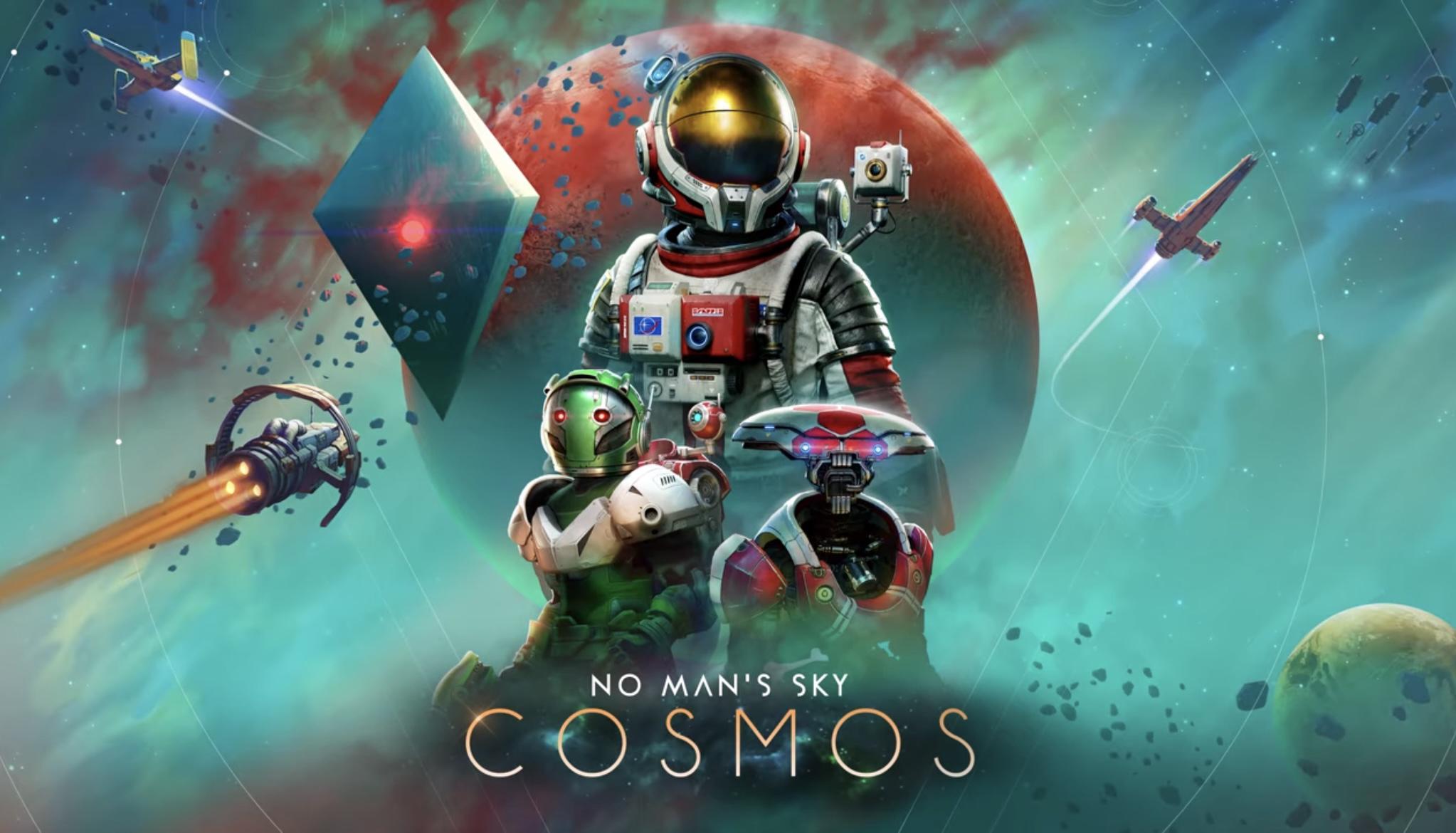
No Man’s Sky turned ten years old this month, and Hello Games marked the occasion with an open letter from co-founder Sean Murray, an anniversary retrospective trailer, and the announcement of the next major update, Cosmos. It’s a notably different tone from the one surrounding the game’s original release — and that shift is the reason No Man’s Sky is now widely cited as one of the most significant redemption arc in modern gaming.
The 2016 Launch: What Went Wrong
No Man’s Sky released on PS4 on August 9, 2016, followed by a PC release three days later. The launch is remembered as one of the most turbulent in gaming history, driven less by technical failure than by the gap between pre-release marketing and the final product.
Ahead of launch, Hello Games and its associated marketing had suggested features including real-time planetary physics, in-atmosphere ship combat, and meaningful player-to-player interaction. Several of these were absent at release. Players compiled detailed lists comparing promotional claims to the shipped game, and the disparity became a flashpoint for wider criticism.
The core gameplay loop also drew criticism independent of the marketing controversy. While the game’s procedural generation technology produced a functionally unlimited number of planets, the moment-to-moment content on those planets was repetitive, and progression systems were thin. The result was a game that delivered scale without much of the promised depth.
In the weeks following launch, Hello Games largely stopped public communication. Sean Murray, who had been the primary public face of the game, gave few interviews for an extended period. Industry commentary at the time widely treated the game as a cautionary example of overpromising ahead of release.
A Decade of Free Content Updates
Rather than abandoning the project or pivoting away from it, Hello Games committed to a long-term update cycle, releasing what is now close to 40 major updates over ten years — all of them free to existing owners. Several stand out as turning points:
- Foundation (2016) — Added base building, purchasable freighters, and new game modes. The first substantive post-launch update.
- Pathfinder and Atlas Rises (2017) — Introduced land vehicles, base sharing, and a structured story campaign.
- NEXT (2018) — Added full multiplayer, a third-person camera option, and a broad visual overhaul. Widely regarded as the update that changed public perception of the game.
- Beyond (2019) — Added VR support and the Space Anomaly, a shared multiplayer hub.
- Origins (2020) — The first major planetary overhaul, adding larger terrain features, sandworms, and binary/ternary star systems.
- Frontiers, Sentinel, and Outlaws (2021–2022) — Added settlement management, an overhauled combat and sentinel AI system, and space piracy mechanics.
- Waypoint (2022) — Rebuilt the inventory system and coincided with the game’s launch on Nintendo Switch.
- Worlds Part I (2024) — A second planetary overhaul, including new water rendering and megafauna, expanding on the changes introduced in Origins.
- Voyagers (2025) — Introduced Corvettes, the largest player-buildable ship class, assembled and crewed modularly.
In 2026 alone, updates have added a gravity-based traversal tool, a creature-battling system, and large-scale multiplayer encounters. The game has also added Steam Deck verification, cross-save support, and continues to receive regular content drops. No Man’s Sky has won multiple industry awards for Best Evolving Game, including recognition from The Game Awards and BAFTA.
The 10th Anniversary and Cosmos
Hello Games confirmed the next major update, Cosmos, as part of its anniversary announcements this week. Details remain limited, though Murray indicated further information is forthcoming. Based on the spacing of recent major updates, a release sometime in late 2026 is plausible, though unconfirmed.
One figure from Murray’s anniversary letter has drawn particular attention. According to Hello Games, less than one percent of the planets in No Man’s Sky have been visited by players, despite roughly ten years of active play and hundreds of millions of collective hours logged. Given the game’s procedurally generated scale of approximately 18 quintillion planets, this is consistent with the numbers involved rather than a marketing exaggeration.
Hello Games also confirmed continued development on Light No Fire, a separate title using similar procedural generation technology, set on a single Earth-scale planet. It is currently confirmed for PC, with a release window sometime after 2026.
Why the Story Is Notable
No Man’s Sky’s recovery is frequently referenced in gaming industry discussion for a few specific reasons. All major content added since launch has been distributed free of charge, without a battle pass or recurring monetization structure attached to it — an approach that stands apart from most live-service titles of comparable scope. The studio also rebuilt public trust gradually, largely through consistent shipping rather than marketing or messaging, over a period of several years before the game’s reputation shifted in earnest.
The broader takeaway cited by analysts and critics is not that ambitious scope is inherently risky, but that shipping ambitious scope before it is finished tends to be. No Man’s Sky’s ten-year trajectory is, in that sense, a case study in a small studio closing the gap between a stated vision and a delivered product — over a much longer timeline than is typical in the industry.
