
Steam Frame Reviews Are In: Here’s What the Community Actually Thinks
I’ll be honest — I’ve been half-watching my Steam client for two years waiting for this thing to show up, and now that it’s actually here, I almost don’t know what to do with myself. Valve’s Steam Frame, the standalone VR headset formerly known by its “Deckard” codename, officially launched on September 14, 2026, and the reviews landed almost immediately after. So did the price complaints. So, so many price complaints.
If you’ve been sitting on the fence about whether to throw your name into Valve’s reservation lottery, here’s everything worth knowing: what the headset actually is, what the professional reviewers are saying after weeks of testing, and what actual VR owners are grumbling (or gushing) about over on Reddit and the Steam forums. (And if you’re weighing it against other headsets on the market, we’ve also covered where Samsung’s Galaxy XR fits into the extended reality landscape — worth a read if you’re comparison shopping.)
What Is the Steam Frame, Again?
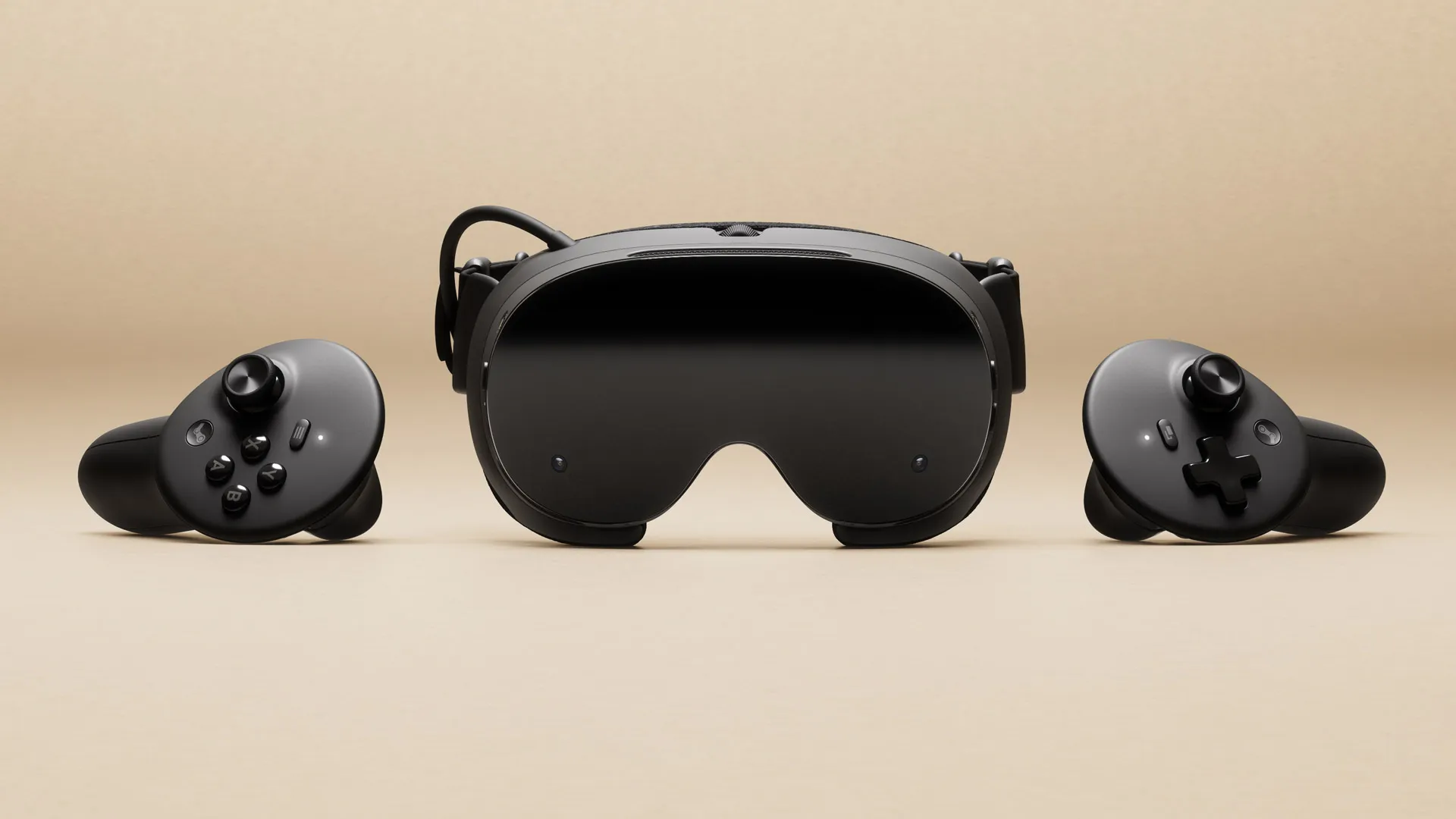
Quick refresher, because it’s been a long road to launch. The Steam Frame is Valve’s first standalone VR headset — meaning it doesn’t need to be tethered to a PC to function, unlike the old Valve Index. Under the hood, it’s running a Qualcomm Snapdragon 8 Gen 3 chipset paired with 16 GB of unified LPDDR5X RAM, with storage options topping out at 1TB. Think of it less like a dedicated VR gadget and more like a tiny Linux gaming PC strapped to your face — because that’s basically what SteamOS turns it into. Valve’s been steadily investing in that ecosystem for a while now, including a round of library and accessibility upgrades to Steam itself that’s part of the same broader push to make your existing game library feel at home no matter what hardware you’re using.
The headset ships in two configurations:
- 256GB model — $1,059
- 1TB model — $1,299
Both come bundled with a free copy of Half-Life: Alyx and the Steam Frame’s own wireless VR controllers, though notably, a power adapter is not included in the box — that’s a separate $29 purchase, and an Ergonomic Accessories Kit runs an extra $49–59 depending on your region.
For streaming from a gaming PC, Valve bundles a dedicated wireless dongle that taps into a 6 GHz connection alongside the headset’s own 5 GHz Wi-Fi radio, automatically switching between the two for the most stable connection.
First Impressions: The Good
The overwhelming consensus among reviewers who’ve spent real time with the Frame is that Valve nailed the experience of using VR, even if it didn’t necessarily reinvent what VR looks like.
PC Gamer’s Jacob Ridley spent three weeks with the headset and called it the best all-round VR headset he’s used to date, pointing specifically to how the Frame eliminates the usual friction of setting up a play space, adjusting straps, or untangling cables. He measured the tracking as essentially flawless across weeks of testing, with no instances of lost boundaries, floor height resets, or controllers losing tracking — something he noted actually happened repeatedly on a competing high-end headset during the same testing period. He also found the Frame’s field of view claims to be accurate rather than inflated, measuring a 110-degree horizontal field of view that matched Valve’s own spec sheet, and praised the headset’s binocular overlap — a lesser-known but important comfort metric — as competitive with headsets costing significantly more.
Tom’s Guide’s early roundup of reviews echoed the sentiment, summarizing the general critical response as good looks and good performance, undercut by a price that’s hard to swallow.
Tom’s Hardware was similarly impressed with the industrial design, describing the headset’s look as a departure from the “Daft Punk” aesthetic of the old Valve Index toward something that reads more like oversized ski goggles, with an organic build using soft curves and thin plastic to minimize weight. On the performance side, Half-Life: Alyx running natively on the headset’s ARM chip ran well, though the reviewer noted some stutters and slight lag compared to streaming it from a PC.
Club386 similarly landed on the headset being genuinely excellent for wireless VR gaming, while flagging the cost as the sticking point holding it back from an easy recommendation.
First Impressions: The Not-So-Good
Here’s where things get bumpy — and it’s almost entirely about money.
Every single review I dug through mentions the price unprompted, which is usually a sign that reviewers can’t get past it even when they want to. It’s a familiar story in 2026 — we saw the same “impressive hardware, painful price tag” tension play out with the ROG Xbox Ally X earlier this year. Ridley at PC Gamer put real numbers to it: the 256GB Steam Frame costs roughly 76% more than a comparable Quest 3, and is only marginally cheaper than premium enthusiast headsets like the Bigscreen Beyond 2. He even got Valve’s own engineers to admit, on record, that the RAM shortage that’s been rattling the entire tech industry this year forced the Frame’s price higher than the company originally intended to ship it at.
Battery life is the other recurring complaint. According to Notebookcheck’s breakdown of the early reviews, running Half-Life: Alyx natively on the headset can drain the battery in under an hour, which means power banks are basically a mandatory accessory if you plan on marathon sessions. PC Gamer’s own testing lines up with that: 63 minutes running Half-Life: Alyx locally on the headset, versus 114 minutes when streaming the same game from a PC in battery-saving mode.
There’s also a more philosophical critique floating around — that the Frame is an excellent piece of hardware arriving into a VR software ecosystem that just isn’t growing the way it used to. One widely shared take argued that new VR releases have become rare enough that people mostly default back to Beat Saber and Half-Life: Alyx regardless of which headset they own, meaning even great hardware can’t fully escape a stagnant content pipeline.
The Community Verdict: Reddit, Steam Forums, and General VR Skepticism
Professional reviews are one thing, but the real temperature check happens where actual owners (and would-be owners) hang out.
Over on the Steam Discussions forums, reaction has been split fairly evenly between cautious excitement and outright cynicism. One particularly blunt thread — bluntly titled to call the headset “corporate slop” — picked up traction within hours of launch, a pretty clear signal that a segment of the Steam userbase feels priced out and isn’t shy about saying so.
That tension between “this is genuinely impressive hardware” and “this costs more than my monthly rent” seems to be the defining thread across VR-focused Reddit communities and forums right now — and if it feels familiar, it’s the same shape of backlash we saw when Xbox Game Pass raised its prices last year: genuine product appreciation running headlong into genuine sticker shock. A lot of the skepticism traces back to the memory chip shortage that’s hit the entire industry in 2026 — the same crunch that pushed Valve’s own Steam Machine console above its originally planned price point earlier this year. Enthusiasts who’ve followed the Frame since its November 2025 reveal are largely sympathetic to the supply chain excuse, but that sympathy doesn’t necessarily translate into an easier time hitting “purchase.”
On the more positive end, longtime PC VR users — the kind who’ve been stuck using aging Valve Index hardware with its clunky base stations — are treating the Frame’s wireless tracking and no-base-station setup as a genuine quality-of-life leap, even if they’re grumbling about the bill.
Demand also appears to be real, regardless of the price chatter. Valve’s randomized reservation system, designed to limit scalpers and resellers, is currently working through its purchase queue, with the company confirming everyone on the waitlist will eventually get a shot at buying one before the end of the year.
Steam Frame: Pros and Cons at a Glance
PROS
- Excellent, consistent inside-out tracking with no lost boundaries or drifting controllers in extended testing
- Genuinely wireless streaming from a gaming PC via the included dongle, with minimal noticeable quality loss
- Lightweight, comfortable design that holds up over long sessions
- Accurate field-of-view and strong binocular overlap for the price bracket
- No Meta account required — runs entirely on SteamOS
- Modular design with confirmed future upgrade paths, including a swappable-battery strap in development
CONS
- Starts at $1,059, a steep premium over the Meta Quest 3
- Standalone battery life is short — under an hour for graphically demanding titles like Half-Life: Alyx
- No power adapter included in the box
- Optics are competent but not a meaningful leap over the three-year-old Quest 3
- Passthrough is monochrome only, not full color
- VR’s overall software library growth has slowed, limiting how much “new” content the hardware actually unlocks
Frequently Asked Questions
When did the Steam Frame officially launch?
The Steam Frame launched on September 14, 2026, with Valve’s reservation queue open through September 17.
How much does the Steam Frame cost?
$1,059 for the 256GB model and $1,299 for the 1TB model, both bundled with a free copy of Half-Life: Alyx and VR controllers.
Do I need a gaming PC to use the Steam Frame?
No. It’s a standalone headset powered by a Snapdragon 8 Gen 3 chip, capable of running compatible games locally. That said, most reviewers agree the best experience comes from streaming games wirelessly from a PC.
How does the Steam Frame compare to the Meta Quest 3?
Specs are fairly close — similar resolution, refresh rate, and field of view — but the Frame has more RAM, runs SteamOS instead of Meta’s Horizon OS, and doesn’t require a Meta account. It also costs significantly more.
Is the battery life actually a dealbreaker?
It depends on how you plan to use it. Streaming from a PC roughly doubles battery life compared to running games natively on the headset, so PC owners will get noticeably more mileage than standalone-only users.
