
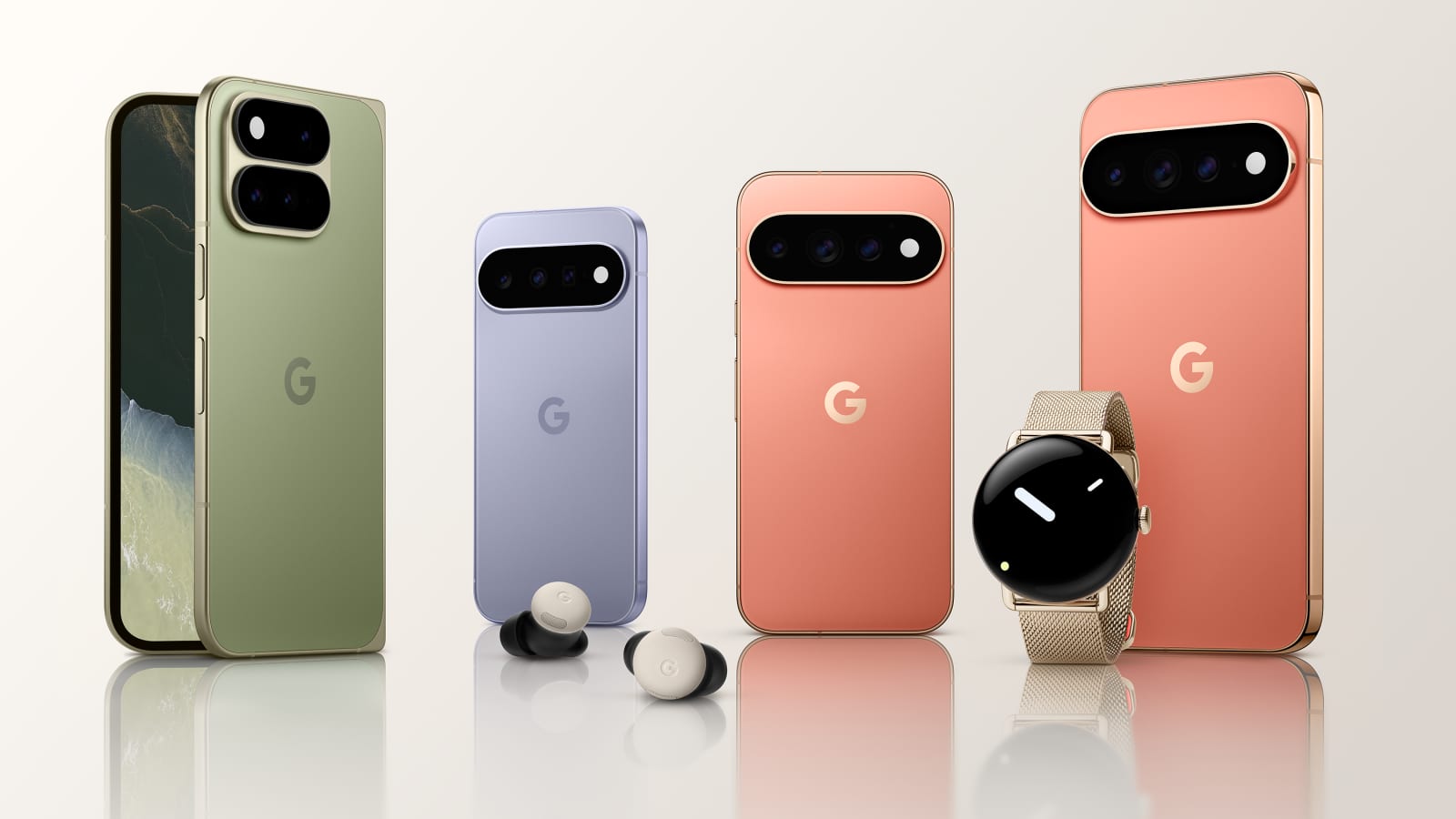
Pixel 11 Launch: Specs, Price Hikes, and the First Impressions Rolling In
Google just handed the internet a new phone to argue about, and true to form, the internet is arguing about the right things and the wrong things in roughly equal measure.
The Pixel 11 launch is officially behind us. The lineup — the standard Pixel 11, Pixel 11 Pro, Pixel 11 Pro XL, and Pixel 11 Pro Fold — went official at the Made by Google event in New York on August 12, and as of today, August 20, the phones are on store shelves. Alongside them came the Pixel Watch 5, a first-ever Pixel Tag tracker, and a fresh color option for the Pixel Buds Pro 2. But the phones are the headline act, and they’re arriving with a chip upgrade, a camera trick that’s already turning heads, and a pricing decision that’s lit up forums the way a dropped controller lights up a group chat.
What’s Actually New
Every phone in the lineup runs on the new Tensor G6, and Google spent more time this year talking about what the chip enables than how it benchmarks — which, if you’ve followed Tensor’s history, tracks. The new chip packs 50% more TPU compute, makes web browsing up to 25% faster and app launches 15% faster, and delivers up to 20% better power efficiency. Paired with the latest Gemini Nano, Google says some on-device experiences run up to 3.5 times faster while using up to 3.5 times less energy. Think of it less as a bigger engine and more as a smarter transmission — the horsepower numbers matter less than how efficiently they’re delivered.
There’s also a notable plumbing change under the hood: for the first time since Tensor launched, the Samsung Exynos modem is out, replaced by one from MediaTek, a move said to cut down on the power drain caused by phones hunting for signal. Pair that with a peak brightness bump to 3,600 nits on the Pro models and faster Qi2.2 magnetic charging at up to 25W across the whole lineup, and you’ve got a phone that’s chasing daylight readability and cable-free convenience harder than ever — even if, oddly, Google didn’t launch any new Pixelsnap accessories to go with that upgraded magnetic charging.
On the design side, the regular Pixel 11 gets an all-glass camera bar that’s 40% thinner than before, while the Pro models trade in last year’s temperature sensor for HiLight — a circular LED cluster that glows with custom colors and patterns when you’re talking to Gemini or getting a notification from a favorite contact, designed to keep your eyes off the screen. Whether that’s genuinely useful or a solution in search of a problem is still up for debate — more on that below.
Security got a quiet but meaningful upgrade too: the new Titan M3 chip adds quantum-safe boot protection, which is Google’s way of future-proofing your phone against a threat model most of us won’t face for years — but better early than never.
The Camera Story: Magic Capture Steals the Show
If there’s one feature giving Pixel loyalists something to genuinely get excited about, it’s Magic Capture. Powered by the Tensor G6’s upgraded Image Signal Processor, the feature works alongside redesigned software and improved sensors to make Night Sight capture up to 4.5 times faster than before, without sacrificing quality. Open the camera, point it at whatever’s happening, and the phone records video while automatically pulling stills from the action — no more mashing the shutter button and hoping you caught the moment.
Android Central’s reviewer, who spent a week with the Pro and Pro XL, called it flatly one of the best camera features in years, saying it’s the rare case where “magic” was the right word to use. The same review flagged Creator Suite — an on-screen teleprompter for anyone filming social content — and real-time in-video translation as standouts, plus a new voice-to-text feature called Rambler that’s designed to smooth over the “ums” and “uhs” in dictated text, similar in spirit to Nothing’s Essential Voice tool. The upgraded ISP also brings 4K Portrait Video to the Pixel 11, 11 Pro, and 11 Pro XL for the first time.
It’s a strong showing for a brand that’s spent the last couple of years watching its camera crown slip to competitors — and by most early accounts, this is the closest Google’s come to reclaiming it.
The RAM Cut Nobody Asked For
Here’s where the goodwill runs into some turbulence. The Pixel 11 starts at $899, a $100 jump from the Pixel 10, while the Pixel 11 Pro starts at $1,099. In exchange, Google doubled base storage on the Pixel 11 and Pixel 11 Pro to 256GB — a genuinely welcome change on paper. But the entry Pixel 11 Pro and Pro XL now start with 12GB of RAM instead of the 16GB that shipped standard on the previous two Pro generations, meaning buyers who want that memory back have to pay for a pricier 512GB configuration.
Google isn’t hiding the reasoning. The company’s VP of Devices and Services, Shakil Barkat, pointed to a supplier-driven memory shortage, citing Morgan Stanley figures showing the cost of 1GB of RAM jumped from roughly $2.80 in 2025 to about $12 this year. That’s not a small swing, and it’s an industry-wide squeeze rather than a Google-specific corner-cut — but “the whole industry is dealing with it” is a tough sell to someone comparing spec sheets side by side.
And compare they have. Ahead of launch, Reddit’s Pixel community wasn’t shy about it: one widely shared comment summed up the mood as “going from 16 GB of RAM to 12 GB of RAM on a phone that costs $100 more is a tough sell,” with the poster saying they’d rather stick with an older Pixel than upgrade into a downgrade. Other threads predicted the pricing shift would dent sales once the spec sheets made the rounds. It’s the kind of controversy that’s less about any single spec and more about trust — Pixel built its reputation on being the phone that didn’t nickel-and-dime you the way flagships from other brands sometimes do, and this is the first real crack in that image in a while.
Content Creator Reactions: Cautiously Impressed, Not Blown Away
The broader reviewer consensus so far reads a lot like “great phone, minor identity crisis.” Android Central’s own verdict, after a week of daily use, was blunt: the Pixel 11 Pro and Pro XL are “harder to recommend despite some fun new Gemini features” — not because anything about them is bad, but because the year-over-year leap feels smaller than the price hike suggests it should. That’s a sentiment echoed across early hands-on coverage, where the visual redesign has been described as close enough to the Pixel 9 and 10 that some outlets initially mistook leaked renders of the Pixel 11 Pro for photos of last year’s model.
None of that is a dealbreaker — Pixel phones have always leaned on software polish over hardware theatrics, and Gemini Intelligence baked deeper into the OS is still the thing most reviewers point to as the actual reason to buy one. But the tone across YouTube first-impressions videos and forum threads alike has shifted from “day-one purchase” enthusiasm to a more measured “solid phone, wait for a sale” stance — a notable change from the reception the Pixel 9 series got when it debuted the current design language.
PROS
- Tensor G6 brings real efficiency and AI-speed gains, not just marketing numbers
- Magic Capture is a genuinely useful, well-executed camera feature
- 256GB base storage across the board is a welcome, overdue baseline
- Titan M3’s quantum-safe protection future-proofs security
- Seven years of OS updates and Pixel Drops keep the phone relevant long-term
CONS
- $100 price increase across the lineup
- Entry Pro and Pro XL models drop from 16GB to 12GB RAM
- Design is nearly identical to the Pixel 9 and Pixel 10
- No new Pixelsnap accessories despite improved magnetic charging
- HiLight’s usefulness is still unproven outside of demo scenarios
FAQ
When did the Pixel 11 go on sale?
The Pixel 11, Pixel 11 Pro, and Pixel 11 Pro XL became available for pre-order on August 12 and hit shelves at the Google Store and retail partners on August 20.
How much does the Pixel 11 cost?
Pricing starts at $899 for the Pixel 11, $1,099 for the Pixel 11 Pro, and $1,299 for the Pixel 11 Pro XL. Getting 16GB of RAM on the Pro models requires stepping up to a $1,219 configuration for the Pro or $1,419 for the Pro XL.
What chip powers the Pixel 11?
All four models run on Google’s new Tensor G6, built around a new ARM Cortex C1-series CPU and, for the first time, a MediaTek modem instead of Samsung’s.
Is the Pixel 11 a big upgrade over the Pixel 10?
It depends on what you’re weighing. The camera system and on-device AI speed are meaningfully improved, but the physical design is largely unchanged, and the RAM reduction on entry Pro models has offset some of the goodwill from the price-to-storage trade.
Did Google explain the RAM downgrade?
Yes — Google attributed it to an industry-wide, supplier-driven memory shortage, noting that RAM costs have risen sharply since 2025.
